Rivière La Sorgue


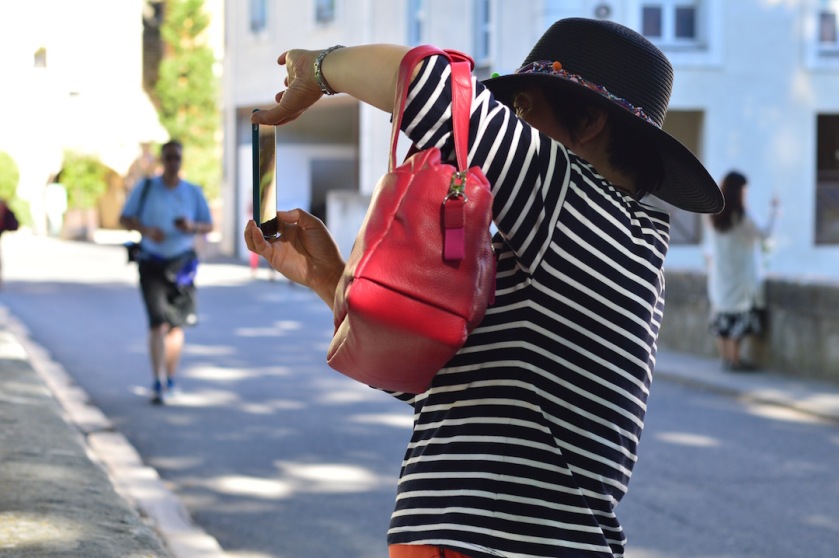
Woman
A woman is overcome by the Sorgue River.

The waters at Fontaine de Vaucluse gush from the rocky cliffs and well up from untold depths below, settle into wide streams and swift-flowing channels, and are eventually collected, tamed and regulated to constitute the Sorgue, which flows south, divides at L’Isle-sur-la-Sorgue and divides again several times more before reaching the Ouvèze, the Rhone, and eventually the Mediterranean.

But the Sorgue has a mysterious source, not entirely understood. For while the waters surge with enormous pressure in spring and fall, following the rains and snow melt, the unexplained flow continues even during the driest summer months.

Thousands of visitors climb the village’s gentle slope, alongside beckoning ice cream and tourist shops. The road and the town abruptly end at the cliff, and here, within a deep grotto is a seemingly shallow pool. This is where the river begins.

Many of these pilgrims are Italian, uncharacteristically morose-seeming. They seek answers at the river’s source. The national sport of shouting is barbed with a drop of bitterness these days. Where you might expect to find them in cafes and restaurants equipped with giant screens tuned to the World Cup, all you see are brawny and sunburned Brits and Germans (alas, the Germans!).

But you do see the Italians at mid-day, in the blistering sun, trudging along what must seem like the Via Dolorosa, to La Source. Afterwards, back in their hotel rooms and B&Bs, windows shuttered, mumbling and groaning into their knuckles.


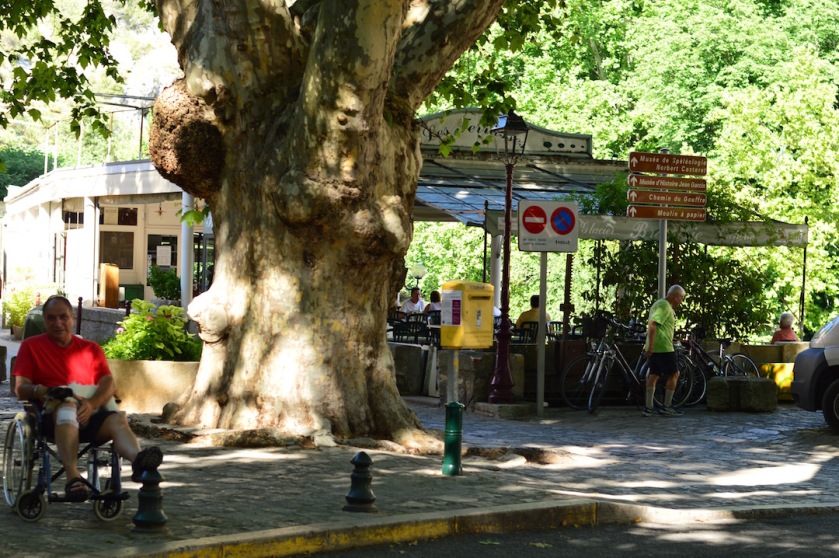
Main square
A giant plane tree in the village square, at Fontaine de Vaucluse. 

The biggest spring in France

But to return. The spring is indeed a gusher — the biggest in France and, according to some sources, fifth biggest in the world. But now we’re getting into ridiculous territory. Who’s the fifth-best James Bond? And which is the fifth-best breakfast cereal? Since we’re not hydrologists, let’s just agree that it’s one of the top springs in the world.

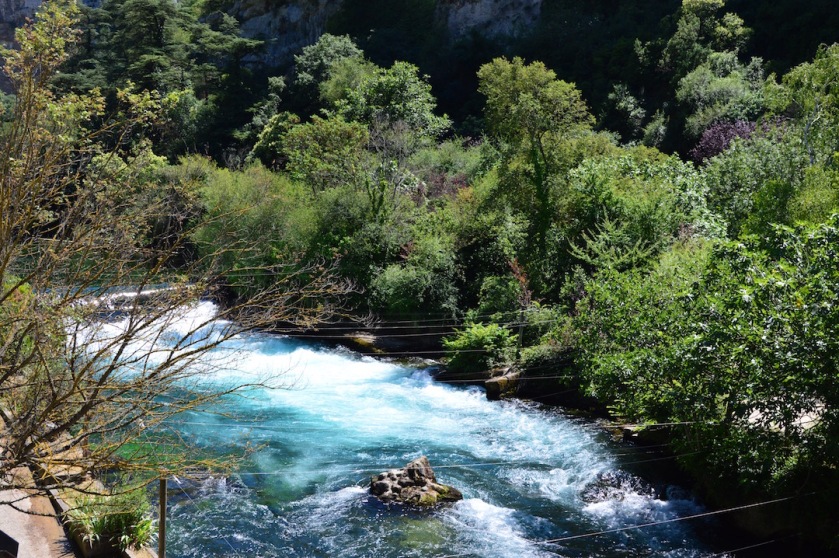
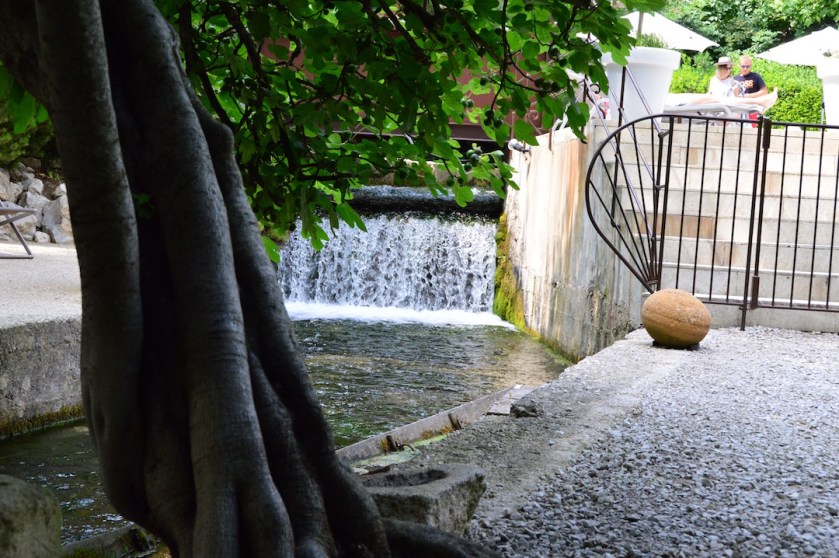
Start of the Sorgue
The Sorgue in Fontaine de Vaucluse, soon after the river’s birth.

Attempts to measure the depths have been taken. First, divers descended but never found bottom. Jacques Cousteau got involved. Then they sent a robotically controlled submarine contraption to a depth of 300 metres. Still no bottom. I hope they leave it at that and don’t continue to torment this beautiful place with facts.

Trout amandine

At dinner the other night, over trout amandine, we watched a man positively bristling with expensive fishing paraphernalia sloshing through the waters below the restaurant and casting his fly in every direction, craftily targeting placid pools, then shadowed areas beneath the trees, then deeper regions where the fish seek cooler waters.

The fish were having none of it. They were no doubt sneering at his equipment.

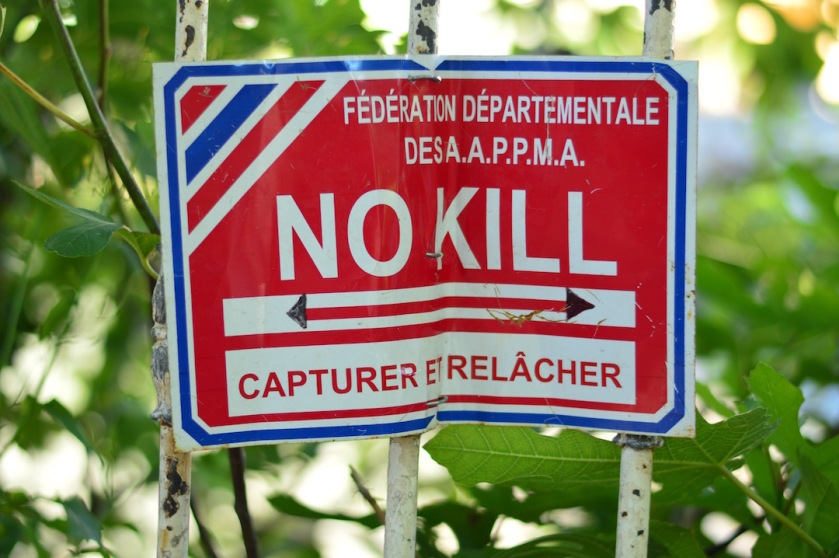
No kill
The trout in our trout amandine come from further downstream.

The waters are in fact teeming with trout and grayling and dozens of other species, and you see plenty of men and boys fishing off footbridges and from the water. It’s a catch-and-release area, though, so the trout you see on so many menus are caught somewhere downstream by less expert-seeming fishermen.

For the record, the fish was delicious.


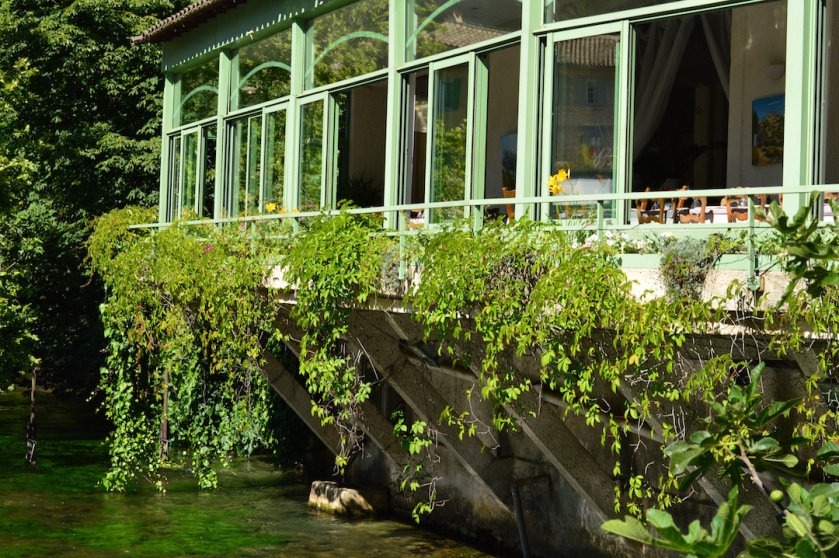
Trout restaurant
The restaurant from where we observed the well-equipped fly fisherman.

The rescue

I got up early this morning for my long run along the aqueduct, and headed north, against the slow current. It was early and there was no one else on the path, but the path and canal are generally deserted at most hours anyway, except for the butterflies and ducks, and the occasional scurrying lizard.

As I rounded a corner, I finally discovered how deep the canal is. A woman was thrashing waist-deep in the water, as a man, possibly her husband, tried to help her out. They must have been at it for quite a while because they both looked exhausted and a little panicked. Meanwhile a small black-and-white dog was nervously jumping about and barking, and the exasperated woman kept telling it to shut up.

I immediately offered to help, and together the man and I grabbed the woman by her forearms and managed to heave her out of the water. Apparently she had fallen in while trying to rescue her little dog, which I now noticed was still wet. They thanked me. In its excitement, the dog was turning cartwheels.

As I turned my Garmin back on and continued my run, I felt for the first time like a godsend.

Fontaine de Vaucluse, Provence

DSC_3639

We fall asleep and wake up to the sound of rushing water.

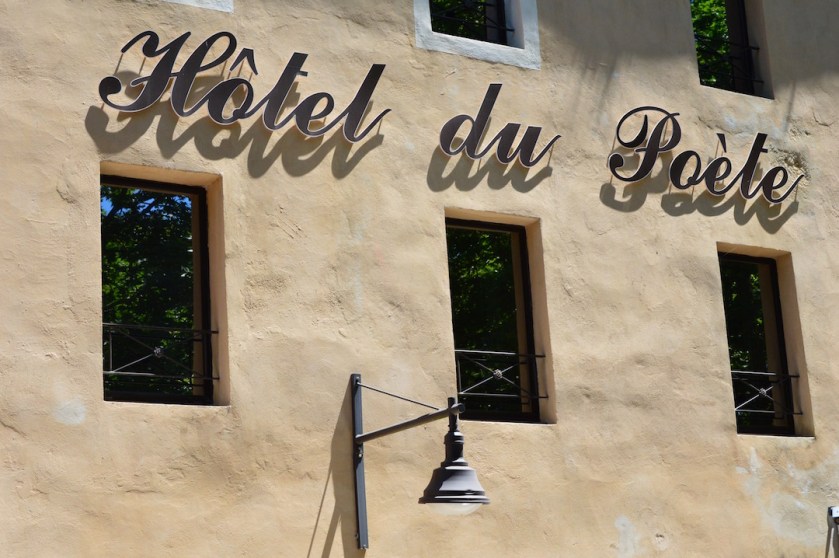
We’re installed in a former mill, now the Hôtel du Poète, in the ancient village of Fontaine de Vaucluse. Water gushes everywhere, braids into a hundred channels, leaps over stones and dashes along walls and buildings, disappearing beneath and then bursting out again on the other side. Massive water wheels, which once powered the mills, are now decorative but still turn, covered with inches of dripping moss. Ancient millstones lean against buildings, and everywhere giant plane and fig trees, iridescent damselflies and trout hovering sleepily in the watery turbulence.

And yet, blind to all this, driving here from Avignon, wedged into the middle seat of our transport van, I anxiously scoured the roadside looking for the shoulder where I was expecting to run. There are no shoulders. Just rocks and dry, waist-high shrubs pushed up against the asphalt, trucks and cars hurtling by, and no place for a poor runner to go.

Hotel
Where we’re staying. More about the Poète in a later post.

I wonder how much trouble it will be to transport my body home. Easier and cheaper for all concerned if they just bury me here. Cremation has always seemed the more sensible and environmentally correct option, but on the other hand, the local cemetery must be quite picturesque. Friends could combine a nice holiday in the South of France with a visit to my grave. Maybe shed a tear or tear or two, voice a few regrets (I never told him how much I loved and respected him. And now it’s too late…), raise a glass to my memory.

But if I’m serious about interring my bones here, I should at least tell someone of my intentions. I should write it on a Pastis coaster and leave it where it can be easily found. Then I thought of other objections. Such as the fact that I’ve been baptized Greek Orthodox and the local clergy, increasingly jealous and territorial, might…

“How far eet eez you want to run, monsieur,” inquired the man at the desk.

It was a couple of hours later and I was kitted out for running. I told him.

“Ah,” he said, pondering. He instructed me to return the way I had arrived. In about one kilometre, I will see an aqueduct. Look for a path on the right, and run along the water. No cars. “Bon chance!”

Backyard.jpg
Some of the watery action at the rear of the hotel, where I’m sitting to write this.

The ass

It took a couple of tries to find the path. I passed a kayak rental place swarming with school kids in life vests, then labouring, unhappy-looking cyclists in spandex, then carloads of Italians shouting at each other.

As I turned a corner, there it was. Monstrously large, clambering down on giant stone legs from the mountains and striding across this narrow valley to descend on the other side and water the grapevines and figs. In my white-knuckle anxiety about where to run, I had missed it when the van passed right beneath.

It took a couple of tries but I finally found the path and climbed to the top. A grey-green channel flowed silently from the foothills, almost funereal in its progress, compared to the mad watery scramble below.

In a moment, I was running along a cool tunnel of vegetation, dotted with wild poppies and daisies. Further along were olive and fig trees, clumps of bamboo and oleander. Mother ducks and ducklings slipped into the water ahead of me, alarmed by the clomping human. At this point, when I thought it was all too much, somewhere close by a donkey began to bray and I had to laugh at my luck.

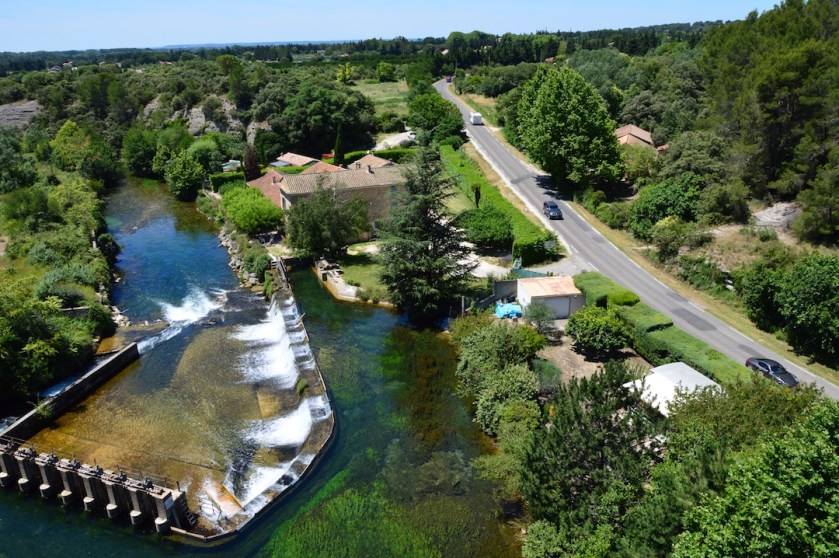
Waterworks
The view from the aqueduct, high above. Below are the extensive and mysterious waterworks where the Sorgue River begins. More about this, too, later.

French engineering

“Probably a Roman aqueduct,” I said later on at dinner, over roast duck. After all, we’d just visited some very extensive Roman ruins in Lyon, which is 250 kilometres north of here, via the TGV. It stands to reason that the Romans would have begun their pillaging and rebuilding here first.

But then I looked it up and this aqueduct is as French as brie.

It was built in the mid-nineteenth century to bring irrigation water from the Canal de Carpentras, which begins in the foothills of the Alps, to the Comtat plain, before emptying into the Ouvèze River.

So far, I’ve run three times along the aqueduct: a let’s-see-what-this-is-like run, a tempo run, and intervals.

Which reminds me, I have no idea how deep the aqueduct is and I know for a fact that Spyro is capable of drowning in a saucer of water. I should check on a map to see where it actually leads, and the possibility that my waterlogged body could wind up wedged beneath a grapevine. Not a bad way to go, all things considered.

Cape Cod

Cape

I wrote a short story a while back about a father and his son, and titled it Cape Cod. Vacations, which allow for some escape from ordinary routine, sometimes create the conditions for extraordinary events.

I hope you like the story. You can link to it from the title above, or go directly to the “Stories” menu on my blog and binge on all of them.

Run in peace

Peace

I went for a medium-distance recovery run and, floating along on happy thoughts on a warm spring day, soon found myself at a nearby cemetery.

No doubt my Asics led me there because I’d spent the previous Saturday at a Greek memorial and it was still fresh in my mind. I later came home to write about the twin mysteries of barbarians at the gates and angry men.

Anger and intolerance are unfit for a tranquil place like this, I reflected, especially when it’s called Tranquil Place.

Combine a couple of dozen words at random — say, words like, hilltop, eternal, grove, maple, pleasant, peaceful, glade — and you, too, can play the cemetery name game. You might get Maple Leaf Gardens, which has a familiar ring to it, but also Eternal Glade, which could be monotonous as a view or an air freshener.

The Dadaists used to snip words from the newspaper, shake them in a bag, and declare the random words that fell out to be a poem.

Gerald de Nerval, one of the grandfathers of Dadaism, had a pet lobster he’d tie with a blue ribbon and take for walks on the streets of Paris. He eventually hanged himself, and if there is such a thing as poetic justice, he used a blue rope.

When they found him, the Paris police were puzzled by how the suicide’s hat managed to stay on. Did he make a big enough noose to fit over the hat and head? Or did he remove the hat, slip the noose around his neck, replace the hat, and then proceed? So many questions! And how, at the moment of reckoning, as gravity executed its sudden work, did the hat not fall to the floor? Was it like a party hat, with an elastic under the chin?


The democracy of worms

My local running cemetery, where these baffling thoughts keep me occupied, isn’t lush and dramatic, like the one on Mount Royal. No titans of business here, like the Molsons — never mind mad luminaries like de Nerval.

My local running cemetery is small, modest and discreet. You have to know it’s there, and I’ve often been stopped, while out running, by carfulls of ancient ladies asking for directions to the place.

I’m pleased to see that it’s enjoying a growth spurt. I was surprised to find Greek Orthodox and Muslim sections of eternal repose. There’s a sizeable Jewish quartier, joining pre-existing Christian neighbourhoods with nicely segregated Catholics and Protestants. There’s also a Field of Honour or Last Post Parade Ground or Heroes’ Walk or I forget what, where veterans get free admission.

No Buddhists, Hindus or Druids, though. But I imagine there are plenty of atheists, unlabeled and undeclared, mixed in with the believers so you can’t tell who’s who.

And, despite all the walls, plaques and hedges separating tribes, the worms continue their steady and undiscriminating work.


A close shave

The best thing about running in a cemetery, though, is that you’re much less likely to get killed. You can always count on cars and trucks, the biggest running hazard by far — bigger than sudden cardiac arrest — to maintain a dignified, funereal pace between the granite slabs.

Outside of cemeteries, though, all bets are off. Runners are expected to use sidewalks and run against traffic, even though most of us don’t bother with sidewalks. We prefer the shoulder. This surprises non-runners and even annoys many drivers. Running on the shoulder and against traffic is viewed as selfish and reckless.

There are lots of good and boring reasons for running against traffic, but my standard explanation is that I want to see my executioner’s face before he pulls the lever, flips the switch, swings the axe or, most likely these days, texts emojis.

To be fair, when most drivers see a runner on the shoulder, they will take their foot off the gas and drift toward the middle, giving us a wide and respectful berth. But not every driver.

It’s a wet March day and a black pickup is barrelling toward me at high speed, rooster tails of slush making the truck look like a speedboat. As usual I’m on the shoulder. But this time I have no choice: the sidewalk is nearly impassable with snow banks and slush.

Two hundred metres out, the pickup isn’t slowing down or ceding an inch. The brain goes on alert. Time slows down. Certain glands quicken and begin to secrete.

One hundred metres out, I glance over my shoulder. No oncoming traffic. Nothing preventing the pickup from sharing the road.

Fifty metres out, eye contact. A man, of course. Wraparound sunglasses, heavy beard. Plaid work shirt. Staring straight ahead. Nope, not going to budge.

Twenty-five metres out, several things happen at once. I dive over a snow bank to my left and land in a pool of slush. The pickup roars by, drenching me in more slush. I pick up my head. The driver, silhouetted in his rear window, shows me his middle finger.

By this time I’m sputtering with rage. A coked-up Donald Duck. I want a stick to break over my knee. Something to throw on the ground and stomp on. I’m trembling, levitating with indignation. I’d give anything for a tire iron in my hands and a chance to flail away at the pickup. To watch the driver’s terrified eyes behind his shattered windshield.

Some version of this has happened more than once. I mean, the outrageous game of chicken followed by the coup de grace of a middle finger. A man driving home some obscure point.

And, every time, unfailingly, my identical reaction. Blind rage and a manly thirst for havoc.

I came home from my cemetery run feeling tired and at peace, and looked in the mirror before heading into the shower. I studied my face for a long while. Time for a shave.

The barbarians in Park Ex

IMG-0393In the first week of real spring weather in Montreal, on May Day, a Nazi flag blossomed from a rooftop on Hutchison Street, in Park Extension. For a few days it was all over the news, and the original event was then swamped by coverage of a weekend rally protesting the flag and the owner’s right to fly it.
Over the same weekend, I attended a memorial service at a Greek church and, while listening to the familiar prayers and chanting from the priest and the psalti, I yawned helplessly, as I always do, and reflected on how hate is a kind of death, how it always tends toward extinction.

After the service we descended to the basement for the traditional coffee, biscuits (παξιμάδια) and wheat berries (κόλλυβa), spiked with a nip of Metaxa, and discussed the recent irruption of racism in our backyards. Someone at the table remarked on the irony of displaying a symbol of white supremacy in Park Ex, in a neighbourhood of immigrants.

It was a weekend of sad reflection, made more poignant by the daffodils and bright sun. Somehow, something got away from us when we weren’t looking. Something big happened right under our noses that we never saw coming.

And now we study the horizon, interrogate the flight of birds, scrutinize that distant column of smoke.

The dread, and dread introspection, reminds me of Constantine Cavafy’s poem, Waiting for the Barbarians, and particularly its haunting conclusion (from Daniel Mendelsohn’s recent translation):

— Why has this uneasiness arisen all at once,

and this confusion? (How serious the faces have become.)

Why is it that the streets and squares are emptying so quickly,

and everyone’s returning home in such deep contemplation?


Because night has fallen and the barbarians haven’t come.

And some people have arrived from the borderlands,

and said there are no barbarians anymore.


And now what’s to become of us without the barbarians.

Those people were a solution of a sort.

We are busy casting for the barbarians. We dread who will show up for the audition. It might be us…or no one.

Hogan’s Heroes

I went to high school with a boy — John Lennon glasses, horsy face behind long, dirty-blonde hair, goofy laugh — also from Park Ex, whose parents had emigrated from Germany after the war.

I don’t know where his father served, and in what capacity, but I do remember him in a graduation robe draped with Dad’s Nazi regalia. (I may even have a photo of this somewhere.) We all thought this was funny and mildly transgressive, but we were not appalled. He was not hauled off to the principal’s office and his picture did not appear in the paper. There was no talking-to.

Our school had enough Greeks, Armenians, Chinese and Afro-Canadians for each group to have its own large and very busy club. We got along, went to each other’s dances, did homework together. The German kid, the son of immigrants, like most of us, was on friendly terms with everyone — a nice guy!

We lived in more innocent times.

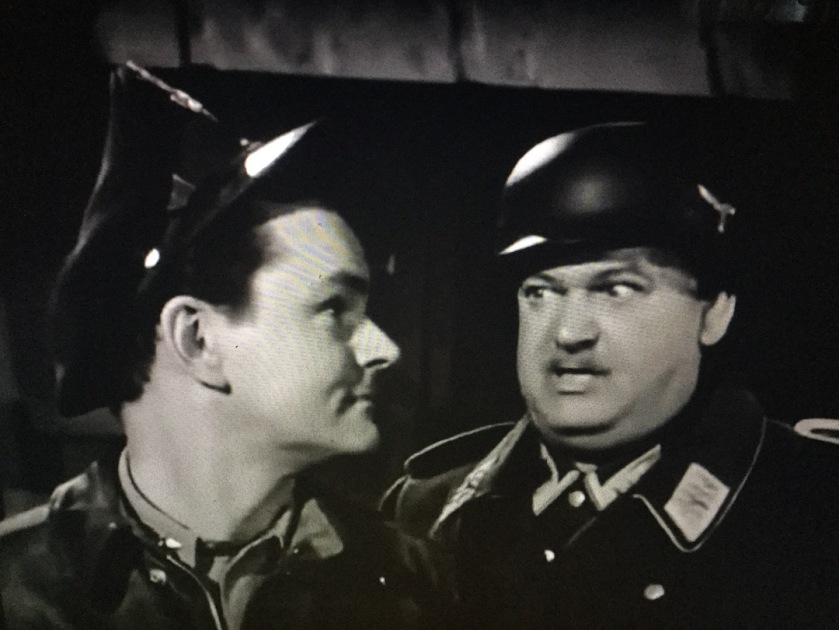
During this same period, incredibly, one of the most popular TV shows was a sit-com set in a German POW camp. Granted, Hogan’s Heroes was not set in an extermination camp, with its crematoria and other period amenities, so there was plenty of space for comedy. The bumbling guard, Schultz, and the clueless Commandant Klink were no match for the clever American and other Allied prisoners who pretty much ran the place. Schulz even had a catchphrase, “I see nothing,” which absolved him from reporting on the prisoners’ tunnel-digging and easy access to the outside world.

The futility of remembrance

The injunction to remember (all Quebecers drive around with Je me souviens on their license plates, urging remembrance about a totally different matter) seems to me hopelessly naïve. Human progress, let alone perfectibility, will always be laughably out of reach, a chimera. We do not remember and we do not learn. And yet, quixotically, stubbornly, perhaps stupidly, some of us feel the necessity to take sides, because there really is no alternative.

Two weeks ago, in Toronto, an incel driving a rented van careened into crowds on Yonge Street, killing ten people and injuring thirteen. Overnight, we learned what incel means.

Last week the Montreal Gazette revealed that one of the Übermenschen of North American white supremacy is a Montrealer. He marched in Charlottesville last year with his angry brothers (they’re pretty much all men), carrying torches and chanting, “Jews will not replace us!” (whatever that means; they could use a wordsmith, methinks).

The article also reminded me that a member of my family with whom I no longer speak has made a career of providing academic cover for this shabby brotherhood. So, as it turns out, the Nazi flag has not only breached the gates, it is blooming right outside my office window, overlooking my daffodils. I could, like Schulz, pretend that I see nothing, but this is no longer possible.

Taygetos

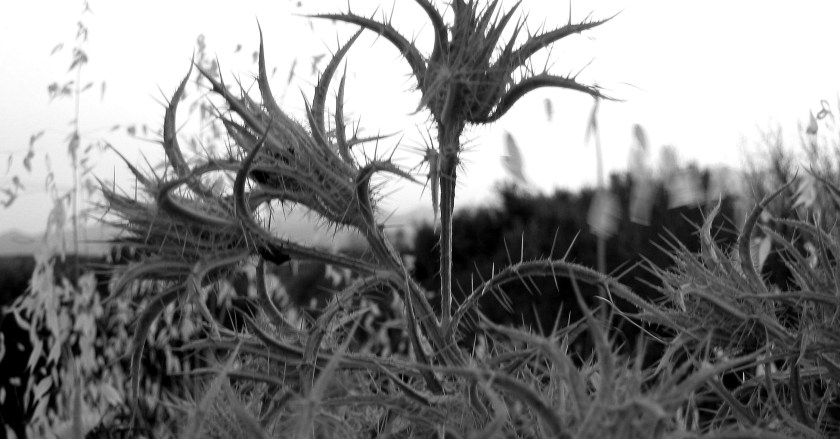
B+W thistles

I didn’t post a short story last month but I’m doing so now. It’s called “Taygetos,” and it’s named for a mountain range, and its tallest peak, in the Peloponnese. The area is among the most rugged in Greece, and among the poorest — a harsh place with its own tragic history and beauty. Look under the Stories heading on my blog, or you can get there directly by clicking on “Taygetos.” I hope you enjoy reading it.


Led τραχανά

Zep2

I dropped in on an elderly aunt in Park Extension, who greeted me with kisses and tears and immediately began bustling in the kitchen, her walker clanking against the stove and getting snagged on table legs as she manoeuvred within the narrow space to make Greek coffee.

She’s well into her nineties, so I offered to take over, but she wouldn’t hear of it. The rules of Greek hospitality are never to be trifled with.

Before finally collapsing into a chair, my aunt dug into her cupboard for a small plastic bag of homemade trahana, a slightly sour, crumbly pasta made with milk or yogurt. Someone had visited the village and had brought back a supply, and this was the last of it, about a cup. She instructed me to make trahana with chicken and stewed tomatoes. I knew better than to protest.

I put the bag on the table so I wouldn’t forget it and saluted her health, taking a long, appreciative slurp of coffee.

Nothing to declare

At Canadian customs, Greeks tell outrageous lies about the contents of their luggage.

Meanwhile, their suitcases clatter with half a dozen bottles of Metaxa brandy, ouzo, tsipouro or mastiha, the last flavoured with the sap of an evergreen that grows on the Island of Chios. More than once, during pre-9/11 days, I’d seen a favourite shotgun, disassembled and lovingly wrapped in cotton batting, resting among the herbs.

For generations, suitcases and tin trunks bulged with needlepoints and tablecloths, rugs, wedding clothes, icons and even pots and pans. But also cotton sacks filled with trahana and chilopites (another kind of pasta). Hard pastelli, made with sesame seeds and honey, bags of dried beans, twists of paper containing tomato seeds, tins heavy with honey. Also, bunches of dried oregano and bags of thyme, chamomile and mountain tea, whose aromas impregnated everything and made clothes unusable for months.

You can buy trahana and chilopites at Greek grocery stores. You can also get pretty good olive oil. The olives, though, never quite measure up to the 25-litre tins families ship to Canada by sea. I stopped receiving those precious tins of olive oil and olives long ago, and this I regret.

Led Zeppelin and sweet basil

One summer, my parents slipped a couple of bottles of Canadian Club into my suitcase, as gifts to my uncle and aunt, with whom I’d be staying in Greece.

I gradually fell in with a group of guys about my age, that summer, and one of the bottles somehow came into our possession on a hot and airless July afternoon. I remember we were in Mitso’s front yard, and the bougainvillea was brilliant against the whitewashed wall. A grey cat dozed in the shade, beside a tub of sweet basil.

There were about six of us, and we took refuge in Mitso’s bedroom, closing the wooden shutters against the heat and light. Someone put on music and we began passing the Canadian Club, taking slugs and growing more relaxed. By the bottle’s third circuit, we were already lurching around the room and performing a kind of dance, sweat pouring from our bodies. Led Zeppelin’s “Kashmir” was playing.

In the middle of all this, Mitso turned to me and asked, “So what are these guys singing about, anyway?”

Everyone stopped and turned to me, expectantly. I liked Robert Plant and Jimmy Page well enough, with John Bonham thundering behind, but the words were hardly the point. What could be more insipid than “Stairway to Heaven”?

But here I was, drunk, attempting a simultaneous translation of “Kashmir.”

Oh, let the sun beat down upon my face
And stars fill my dream
I’m a traveler of both time and space
To be where I have been…

I had to make most of it up.

Then it was on to the Doors. “Light My Fire” was easy enough…sort of, if you’ve had enough to drink. But what about “Rider on the Storm”?

And so it went, all afternoon, getting drunker by the minute and force-marching my addled brain through a dense thicket of rock lyrics.

We finished the bottle and staggered from the house, blinded by the light. The shadow behind the bougainvillea had shifted and the cat was gone.

Still drunk, we climbed on motorcycles and motorbikes, me clinging for dear life behind Mitso, and roared off to the beach. Orange groves whipped by, the fresh blacktop decorated with mysterious green splatters that, when we slowed for the curves, turned into lizard road kill.

By the time we arrived we had cooled off and jumping into the water seemed like too much work. So we sat on plastic chairs under a bamboo shelter and stared at the blue water, our toes curling in the sand. We ordered fried potatoes and beer.

Greek hospitality, the impulse to share food and drink, is baked in. A villager gave a bag of trahana to someone from Canada, who shared it with my aunt, or with someone else who gave it to my aunt — I have no way of knowing, ultimately, how many hands the trahana passed through before it wound up in a small plastic bag, next to my coffee, in a cramped kitchen in Park Ex.

I suppose I could have divided my cup of trahana into thimblefuls and shared it with my own family circle. But just as the supply eventually dribbles away to nothing, so too do the old ways weaken and die. Another thing to regret.


Three mysteries for Greek Easter

Red egg

This week I’ll be dyeing my eggs red, planning Sunday’s big dinner and shopping for lamb. The question occupying my mind is this: given the quantity of food I’ll be preparing, do we also need a pastitsio, with its heavy béchamel sauce and pasta?

I guess I already know the answer to that.

The goat

For weeks, I had been following the she-goat’s pregnancy with interest, as its round belly grew to resemble pieces of luggage. A lumpy day bag, at first, then a sack of odds and ends, and finally a duffel that nearly scraped the stony ground.

A cold February day with low clouds threatening rain, as I hurried home from school.

My aunt saw me from the kitchen window and came out to meet me. “She’s giving birth,” my aunt whispered. “Go have a look.”

To keep the she-goat warm, my aunt had put her in the greenhouse — a rickety structure of wood and plastic sheeting where they protected the tomato seedlings from frost.

And there she was as I entered, literally spilling her guts. The kid, really just a folded parcel of hair and bones soaked in blood, was trembling with electric speed. Its mother gazed at me with the goaty yellow eyes of ancient wisdom and plain stupidity.

I immediately had to leave, as you would leave a scene of violence. But after I caught my breath in the house, I returned twenty minutes later and the kid was already standing on rickety legs and taking its first step. It felt like a resurrection.

Some weeks on, several more kids, from other she-goats, were skipping around the yard and getting in my aunt’s way.

I never figured out how they did it, but at midday I’d often find the kids high up in the olive trees at the back of my aunt’s house. How they managed to climb the trees is beyond me. But there they’d be, perched in the tall branches and bleating joyfully at the sky, as their mothers watched and chewed, far below.

The uncle

My uncle drove a grocery store delivery van, and I’d join him on busy days, humping boxes up steep staircases throughout Park Ex. Gallon tins of olive oil, haunches of meat and wedges of cheese balanced on one shoulder, in preparation for Easter.

He was in a foul mood. The weather — “that whore!” — probably had something to do with it. Overnight, it had turned Canada-cold again and dumped more snow on the ground, threatening the weekend festivities. He loved the good life and hated to work, like a few Greeks. But above all, he hated being told what to do and when to do it, like most of his countrymen.

Our windows were rolled up against the weather, but he was doggedly working his way through a pack of king-size Rothmans. Every time he finished another one, he flicked the butt into the slushy floorboards. He’d been doing this for days and the floor was now littered with butts.

I’d heard the boss, fed up with the state of his van, tell my uncle to stop doing this.

“Why don’t you use the ashtray?” I asked, between deliveries. “You heard the boss.”

“Why? Because I like hearing the ‘tssss’ when my cigarette hits the snow. That’s why.”

The church

Greek Orthodox Easter, rich in ancient rites and mysteries, is the most important holiday on the calendar, and it lasts for days.

Days of clanging church bells, tinkling censers, clouds of aromatic smoke, golden vestments and ranks of candles. Days of the psalti chanting the old, halfway familiar words, and serene-looking saints on every side, jealous for your kiss. Days of the close-packed smell and heat of humanity, rising and sitting as one. The flowers, the praying, the sorrow, the people spilling out onto the street because the church cannot hold them. Then, the midnight announcement — he is risen — and the candles passed from congregant to congregant, and the trembling flame that needs shelter until it’s brought home and held high to mark a sooty cross above the threshold.

I no longer follow these rites, nor do I attend church. I have Netflix.

But even though I am fallen and far from the church, I still stubbornly dye my eggs, roast my lamb and bake my koulourakia, although I’m not sure why.

I think about that kid I saw tumbling out of its mother, barely alive, a flickering flame gaining strength by the minute. I think about my uncle and his stubborn refusal to bend to another’s will, and about my own mulish Greek ways. I think, too, about life’s boundless love and cruelty, of grief and a kind of resurrection.

All these things are mysteries enough to ponder during Easter, as I sprinkle sesame seeds on my koulourakia before sliding them into the oven.

As you’ve guessed by now, one of the kids perched in the olive tree in back of my aunt’s house became our Easter Sunday meal, all those years ago. We cracked eggs, said Christos Anesti, and ate and ate until we were bursting.

Egg basket

Bluffton to Savannah

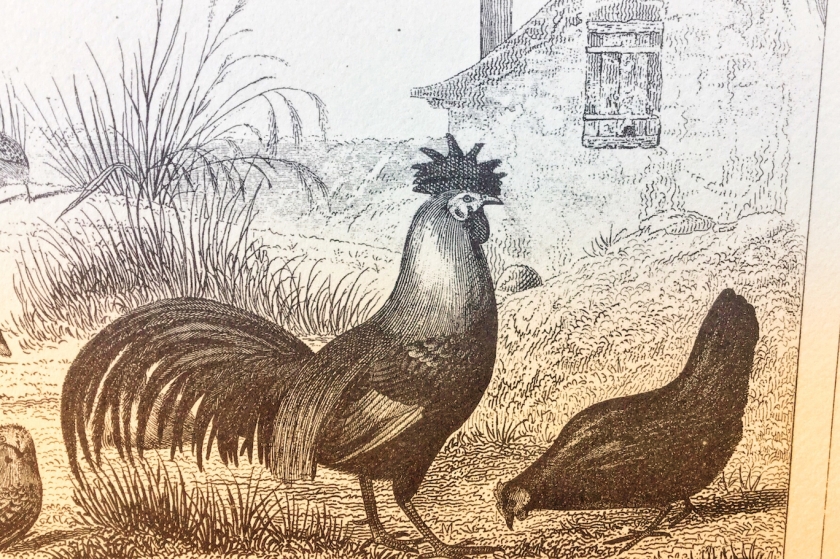
Chicken

On our way to Savannah we stopped for breakfast at Cahill’s Market, in Bluffton, South Carolina. Cahill’s serves up Southern comfort foods for lunch and dinner — waffles and fried chicken, pork chops, oysters and crab cakes.

But breakfast at Cahill’s is all about the chicken, as we realized when we pulled into the parking lot at 7:30 a.m. and saw a large chicken coop out back, filled with several dozen fryers, snowy white in the early morning mist, strutting about and regarding us with chickeny indignation. As it was unseasonably cold, most were clustered around a heat lamp. Life is nasty, brutish and short, for a chicken, but I had the satisfaction of learning these chickens were just for show — a Potemkin coop. As I discovered, their numbers couldn’t possibly sustain Cahill’s business for more than five minutes.

Cahill’s has its own farm and sells its produce next door, where the setup reflects the world’s prevailing food fashion, with labels promising “locally grown,” “organic” and “pesticide free” beans, rice, grits and other Southern specialties.

But the breakfast menu is unabashedly old school, offering heaping platters that promise not so much pleasure as personal injury, such as the Gut Buster and Belly Bomb.

This divided soul is what’s interesting about the South: contradictions and elisions everywhere you look. The anxious desire to move with the times, and a lingering echo from lazier, more carefree times — carefree, at least, for some folks.

In keeping with the chicken-and-physical-mayhem theme, I opted for the Widow Maker — a platter of eggs, grits, toast and chicken livers.

Without really thinking it through, this clueless Northerner somehow expected sautéed livers, as I would prepare them at home: maybe dredged in a dusting of seasoned flour, possibly finished with a dash of balsamic vinegar.

They were in fact thickly breaded, deeply fried and piled so I high I recoiled when I saw them — the way you might flinch before something eats you.

But, abetted with ketchup and hot sauce, I polished them off. I then wiped my face on my sleeve and we drove to Savannah.

General Sherman’s mistress

I’m a champion flâneur, paractically incapable of boredom. I don’t need museums or walking tours of haunted houses. I don’t care to see historic bullet holes or taffy being pulled. Instead, I’m perfectly content spending the entire day on a bench with a book or loafing about aimlessly.

Yes, indeed, countless unproductive hours I’ll never get back. (Of course, these periods of deeply satisfying lethargy alternate with spells of frenetic running, so go figure.)

Missoni
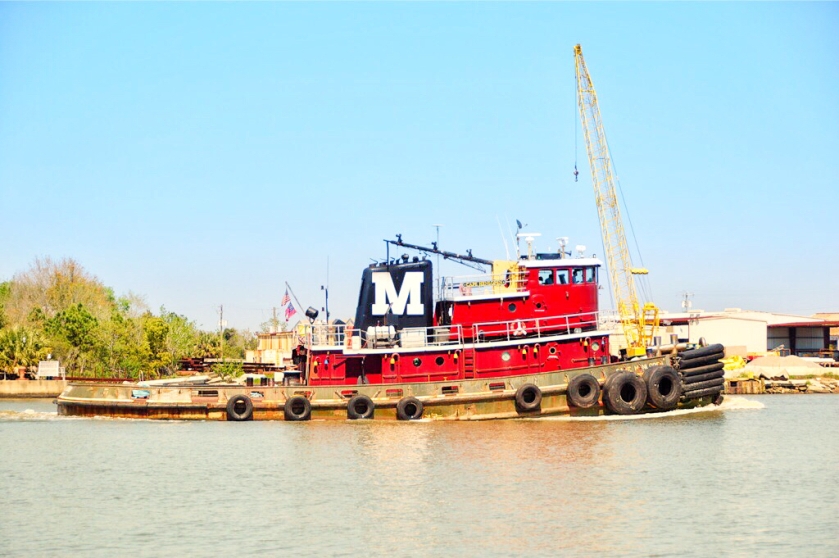
A handsome Missoni tug, spotted on the river and visible from Vic’s on the River, where we enjoyed an excellent meal in Savannah. Fortunately I remembered to load my Brownie with colour film before leaving Bluffton.

Savannah is therefore the perfect city for me. Its downtown is a compact checkerboard of 21 squares, each one surrounded by great old homes and churches, flower gardens, ancient live oaks and, most important, lots of benches. There’s also the great Forsyth Park to loaf around in (about 1.3 km around, if you’re considering a tempo run or intervals), with its picturesque fountain, spreading oaks and local flâneurs draped over benches.

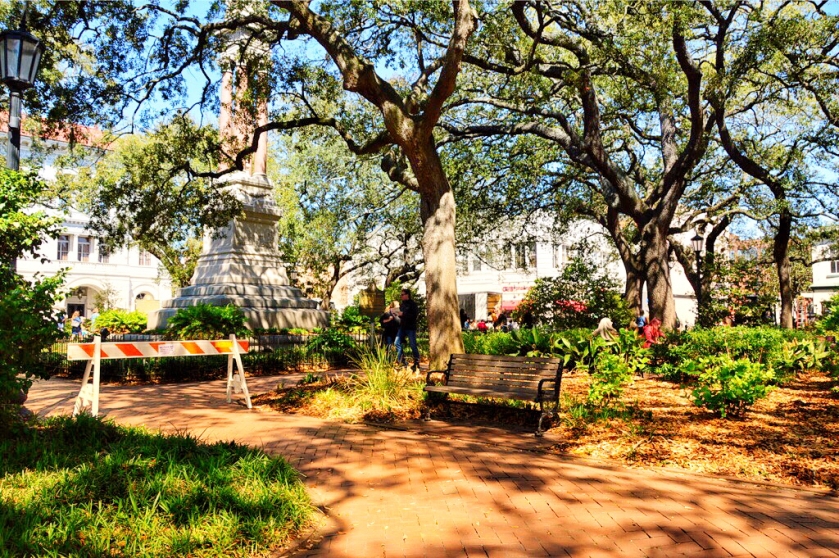
Wright
Wright Square. Note the empty bench, waiting for a flâneur. Note, too, the barrier. We were kicked out of Wright Square because Ang Lee was directing a movie starring Will Smith. Gemini Man, coming to a theatre near you.

Historians are still puzzling out why General Sherman didn’t burn Savannah to the ground, as he did so many other Southern cities. Maybe he forgot. Or, as some suggest, he spared the city because his mistress happened to live there. I think she deserves a statue, even if the story isn’t true.

We had an excellent dinner at Vic’s on the River, where I ordered pretty much the same meal as last time: fried green tomatoes, a salad, and shrimp and grits. If I’m going to eat at Vic’s every two years, and I’m perfectly happy with what I ate last time, I see no good reason to change.


Ship
What the Missoni tug was tugging. Apparently the first transatlantic steamship crossing sailed from Savannah and docked in Liverpool.

Shit yeah!

But the most interesting meal in Savannah was lunch at Zunzi’s, a sandwich counter — literally a hole in the wall — where folks line up on the street to order what are reputed to be America’s best sandwiches. Their slogan is “Shit yeah!” Amen to that.

“Shit yeah!” is plastered across their cars, ads and signs. You can ask for half a dozen sauces at Zunzi’s, including Shit Yeah Sauce and Hot Shit Sauce.

There’s a line-up all day, but it moves quickly. Behind the counter, in an impossibly narrow space, nine surprisingly happy kids scrambled to keep up. Meanwhile, on the street, two greeters talked up passers-by, explained the menu, handed out “Shit yeah!” stickers and directed eat-in customers to tables set up in the adjacent parking lot.

The young African-American woman wrangling customers at Zunzi’s bubbled with energy.

“How y’all like my city?” she demanded, clearly proud of her hometown, its booming trade and street life.

“Shit yeah!” we said.

Shit
She gave us a sticker.

I read somewhere that, in the wake of slavery, Civil War, a failed Reconstruction period and the Civil Rights struggles, African Americans have adjusted better to the national trauma than have white Americans. They’re not in denial about what happened, they understand there is no road leading back, and they’re ready to move on, if given the chance.

Well, I can’t vouch for the truth of what I read. I’m just a know-nothing Canadian passing through. But it’s an interesting notion to think about.

I think, too, of the many contradictions and ironies I sensed at Cahill’s and just about everywhere we went — and not just the free-range basil plants cheek-by-jowl with deep-fried moon cakes.

In nearby Savannah, for example, Zunzi’s is owned by a husband-and-wife team from South Africa named DeBeer. Irony upon irony.

• • •

Back home now and struggling with a short story. I know…about time.

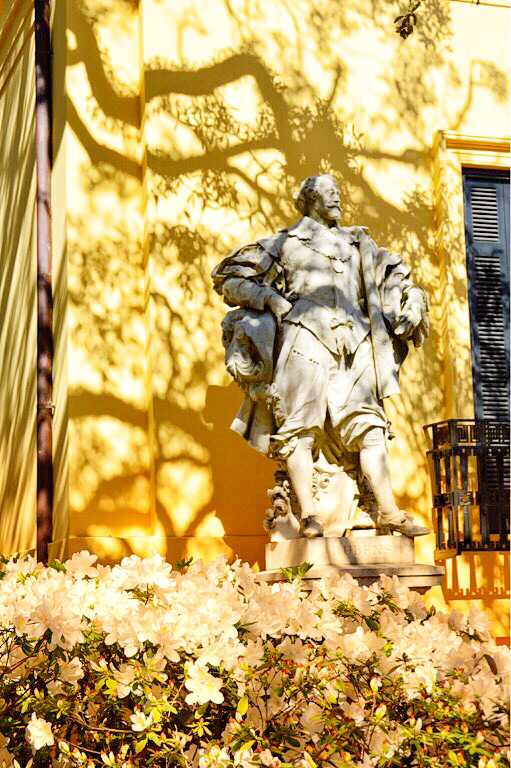
Statue
Statue of a famous Savannah flâneur.

Gator country

It was a moonless night and we had been driving in the dark for some minutes, following the unclear directions they gave us at the gate, so it took a while to find the cabin. The first thing we saw when we switched on the light was this sign above the kitchen sink.

Sign

I thought it was one of those jokey kitchen signs people put up, like: “We only serve the finest wines. Did you bring any?” But the next morning we realized the cabin sits on a narrow strip of land between two ponds in which alligators do, in fact, float like half-submerged logs, their dead-seeming eyes peering just above the surface. They’re everywhere on the property, like squirrels are back home, although with less frantic energy. Driving around, we saw several that had dragged themselves onto the bank to warm in the sun, the largest of them a seven-foot monster. Folks say gators can run surprisingly fast, when they have a mind to.

Advice from my sister-in-law, when she phoned from Montreal: If an alligator gives chase while you’re out running, immediately start zigzagging, as alligators can’t easily change direction.

Gator

Lowcountry

We’re staying in a gated community in South Carolina’s Lowcountry, near the town of Bluffton. The place is so vast — 20,000 acres, encompassing the lands of 21 pre-Civil War plantations — that they recently hosted a marathon entirely on site.

They call it low country because it’s just about at sea level, give or take a couple of feet, which explains the wetlands, the alligators and the many miles of riverfront at your doorstep. We’ve arrived just in time to witness great masses of pink and fuchsia-coloured azaleas in bloom, a visual tonic after months of colour-starved Canada. The live oaks are just coming into leaf, too, and the roads are like dripping tunnels, as the oak branches meet overhead and trail long wreaths of Spanish moss. Strangely ghoulish at dusk, the scene becomes spectral in the early morning light, the limbs like crooked bones clothed in shimmering green ectoplasm.

It’s so picturesque as to seem like a parody of of the South. But it’s real and the residents appreciate what they have and want to share it, which is why our gracious hosts provided us with a waterfront cabin, or “bunkie,” as they call it here.

Road

On the first day, we made sure to visit the new community centre, comprising art studios, conference rooms, upscale restaurants, pools, bowling alleys and other amenities.

It’s quite easy to find: turn right at the first corner, then go past the equestrian centre (173 acres) and the shooting club (40 acres).

Y’all come back, now. Hear?

We were here two years ago, and enjoyed the same southern hospitality. Each time, we learn a little bit more.

Like many places in the South, the adjacent town, Bluffton, was put to the torch during the Civil War, although eight homes did survive, most of which are now restored and occupied by professionals, as the gleaming Volvos and Acuras in the driveways suggest.

The sea-facing bluffs, for which the town is named, catch the distant Atlantic breezes and make Bluffton comparatively cooler and less plagued by mosquitos. In antebellum days, it was a refuge from malaria during the blazing summer months. Plantation owners packed off their families here for their holidays, so the town grew fairly prosperous before the war, but entered a long decline immediately after.

Live oak

The last time we were here, we arrived directly from Savannah (we’re finishing up in Savannah this time), so I was struck by official and unofficial attitudes toward the South’s troubled past. Our Savannah tour guides, for example, maintained a neutral tone about the grand homes we toured: about the families that lived there, their rising and falling fortunes, and where they fit into the larger society. For the most part our guides stuck to the script.

But the moment we entered the slaves’ quarters, the guides lost several degrees of coolness. They made plain where they and the local historical society stand: slavery remains an unregenerate abomination, without palliating conditions, explanations or context.

I remember, particularly, a child’s room with an enormous high-canopied bed topped with bolsters and feather pillows. At its foot was a large chest for toys. On the floor beside the bed was a thin mat where the playmate curled up.

Back in Bluffton

Several days later, I wandered through Bluffton to admire the old homes. Among them is the Heyward House, built by slaves in 1841 for their white masters, and now run by the local historical society. For a few dollars you’re permitted to walk through the cramped rooms and feel like an interloper, peering at the household belongings of wood, leather and iron, ivory, bone and glass.

Out back, more belongings: a one-room shed and a patch of dirt indicates the slave quarters.

I was the only visitor, and the young woman who greeted me, a volunteer, was clearly proud of her town and its past. I don’t know what kind of training she’d had, and whether she was expected to follow any official line. But I did ask some questions, and when she saw that I was genuinely interested in the town’s history, and clearly not from these parts, she informed me that, contrary to what I may have heard or read, the Civil War was primarily a clash of civilizations — a largely rural, agrarian and communitarian society (the South) coming up against a mercantilist, industrial and urban one (the North).

Somehow, in her explanation, slavery got misplaced. Never even came up. Yes, there were slaves. Of course there were! Why, their quarters are right there in back, if you care to look. But that’s hardly the whole story…

I think of the alligators and their inability to change direction. But I remain hopeful.