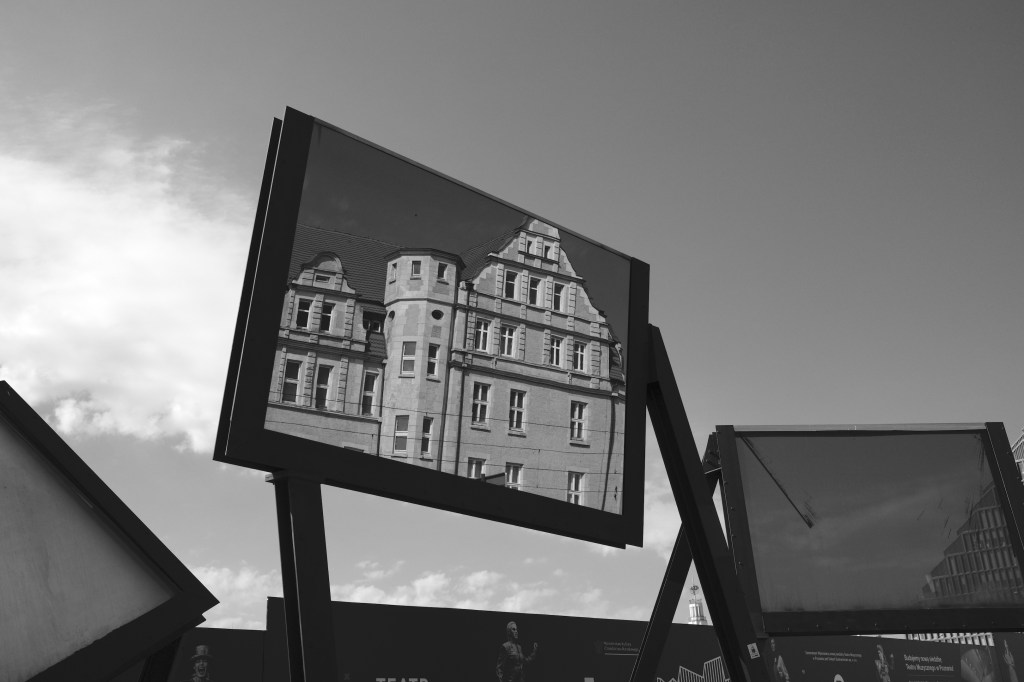
Taken while walking on a street in Poznan. The black frames hold mirrors reflecting skies and buildings. I suspect this is a work of public art, although I found no identifying plaque.
In most countries folks celebrate all the good bits in their history with parades. You get drunk, sing songs (everyone knows the words; it’s how you belong) and, with much good cheer, you remember.
In most countries, as you may have noticed, the very same people work just as hard at forgetting the bad bits in their history. Or at least they try to erase as much evidence as they can, so the younger folk will have a simpler, kinder view of an always complicated history.
Along with many associated convulsions, the latter is exactly what is going on in the United States at this moment.
On our trip to Berlin, I saw what happens when a country decides that it will remember every damn thing — not only the bad bits, but especially the bad bits. The parade of cruelties, deceptions and crimes is laid out in stark detail so everyone can see, the local folks and the visitors. I have to say, the Germans go into such detail, and with such characteristic thoroughness, that you eventually feel numb. Maybe even bored.
This, too, is all too human.
So, before I forget the good and bad bits, here are some photos taken in Berlin and in Poznan, Poland. I’ll add these and more photos from this trip at some later date — quite possibly months from now — to my photo site Taken.
Taken in the small garden just behind the Jewish Museum Berlin. Designed by the architect Daniel Libeskind, the Jewish Museum (2001) traces the history of Jews in Europe. It is quite brilliantly designed.
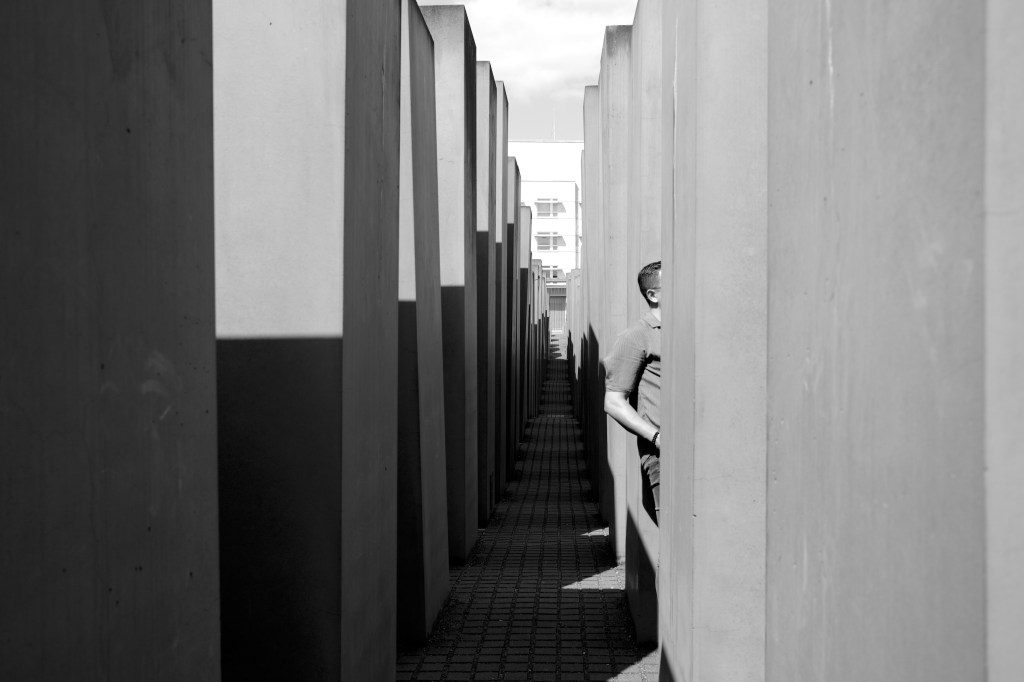
Taken at the Memorial to the Murdered Jews of Europe, designed by Peter Eisenman (2005). The memorial is effective because it can mean many things, though of course those things can only relate to the horror enshrined in the name.
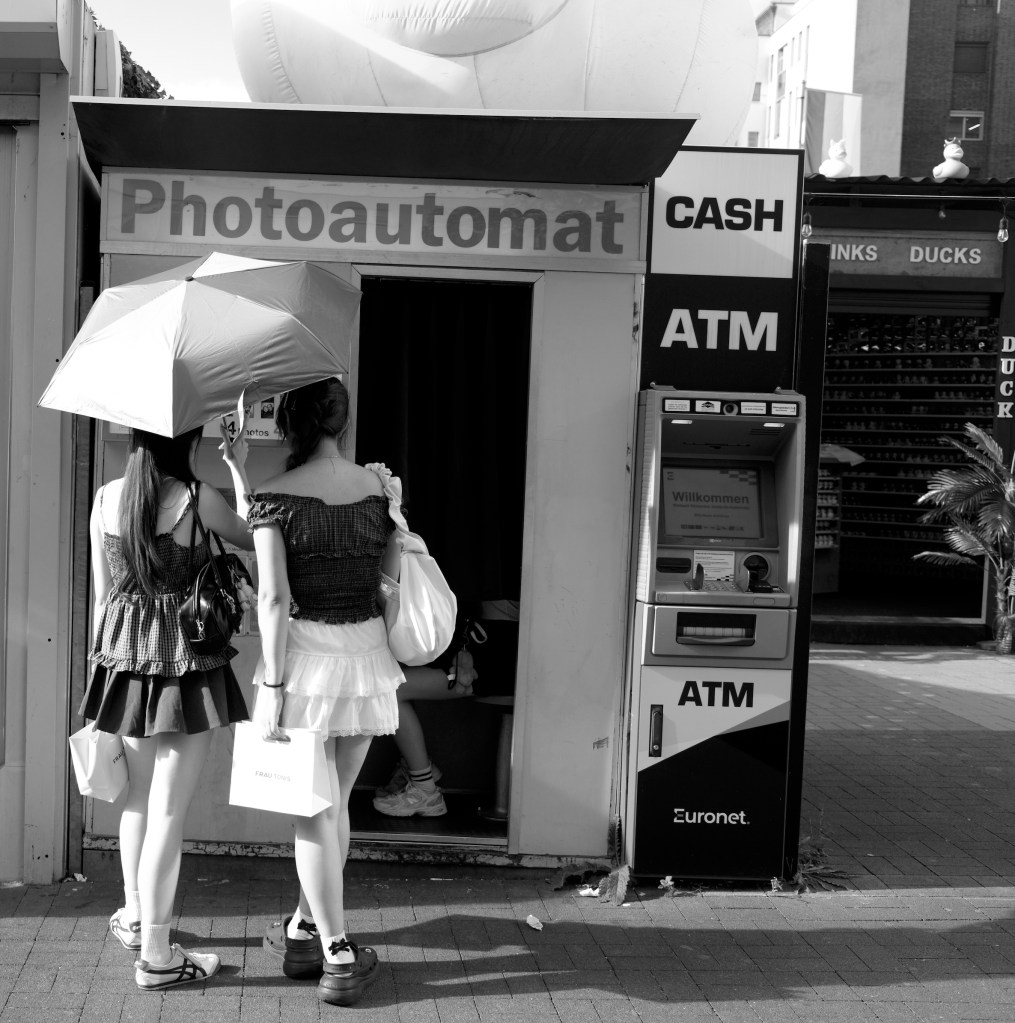
Curiously, photo booths abound in Berlin. Here, two girls visiting from Japan wait for their friend. This booth stood outside a tiny mall where you could rent a Trabant (the infamous East German car) for a day or two. The kitsch surrounding all things Soviet is strange, or maybe not. Nostalgia for Stalin helped to bring Putin to power. (See above: forgetting all the bad bits.)
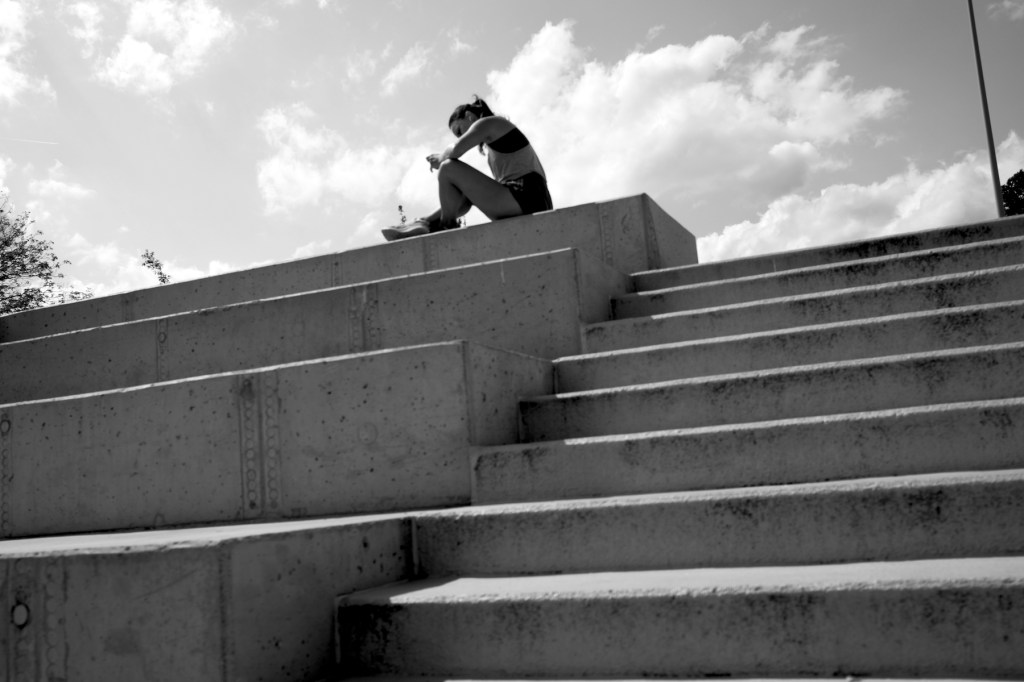
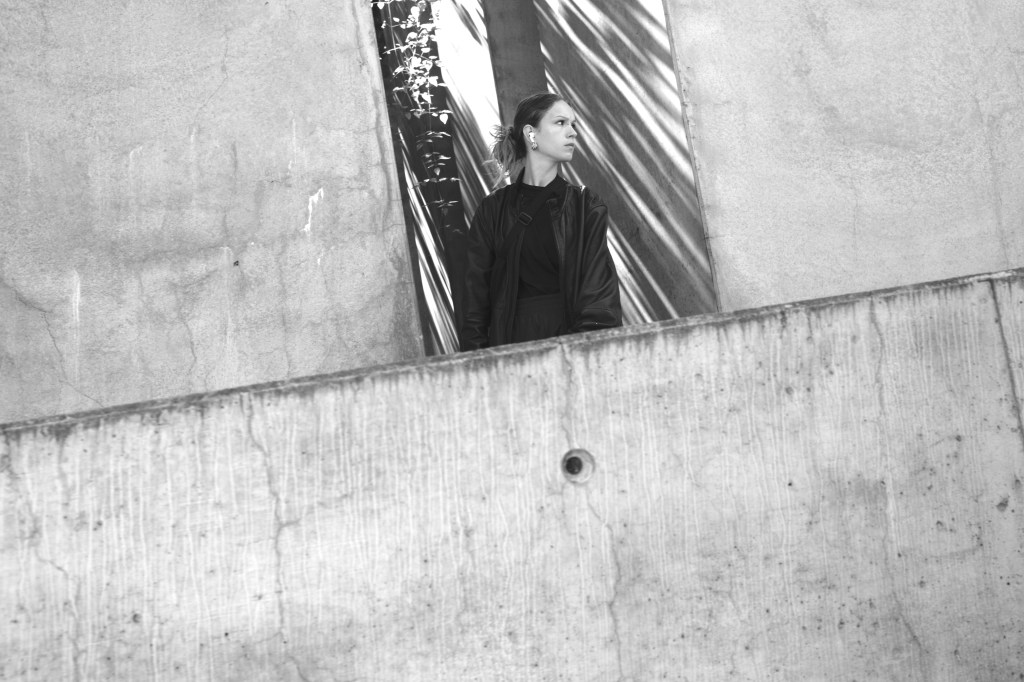
An athlete at the top of her game, taken while walking in Poznan.
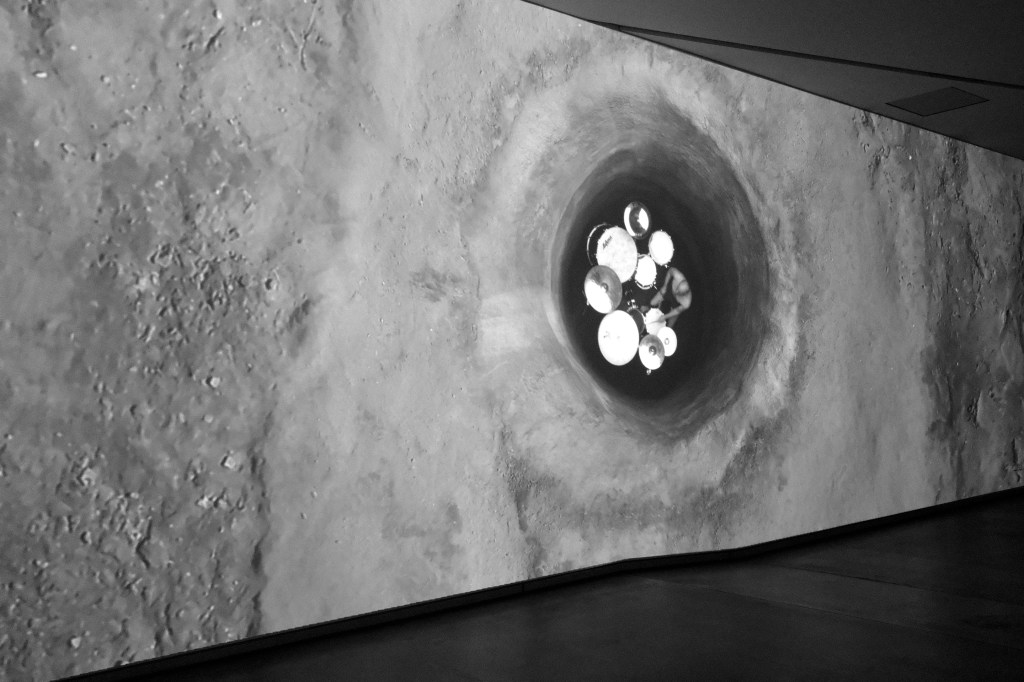
A video wall at the entrance to the Jewish Museum Berlin. If you look closely, inside the hole is a drummer pounding his kit. The experience is loud and jarring, and this is how you enter and begin your experience. As I said, the museum design is brilliant.
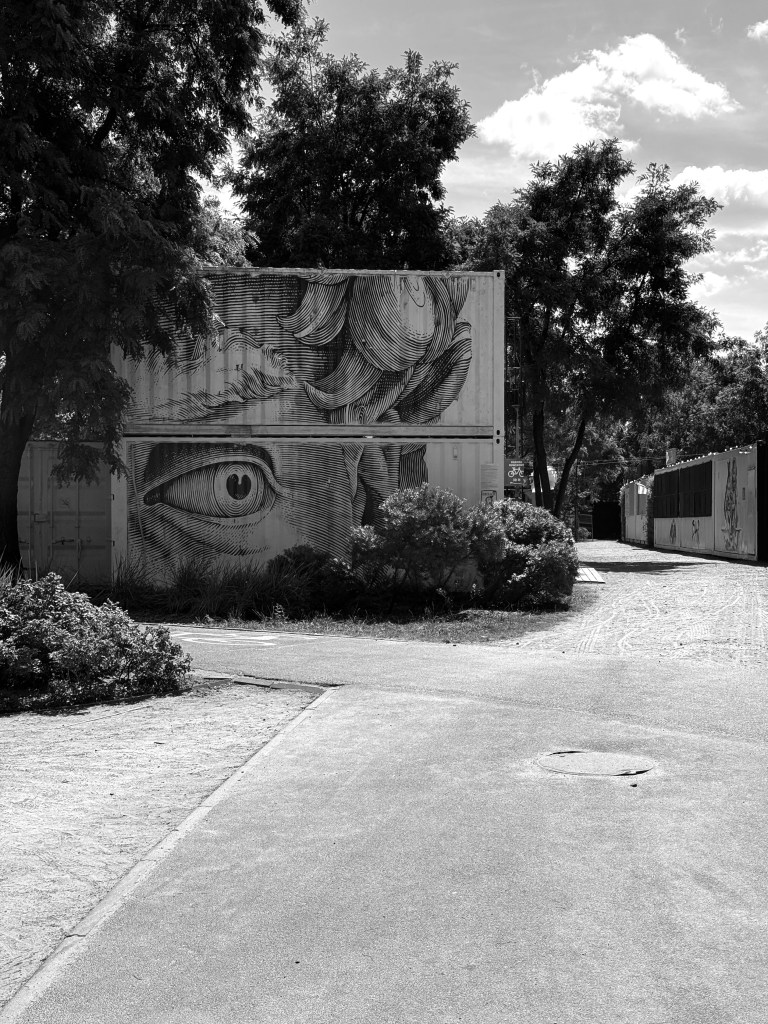
Taken near the river Warta in Poznan. I don’t know how Poland deals with remembering: what you see, don’t see and choose not to see. I do know that the debate is fierce.
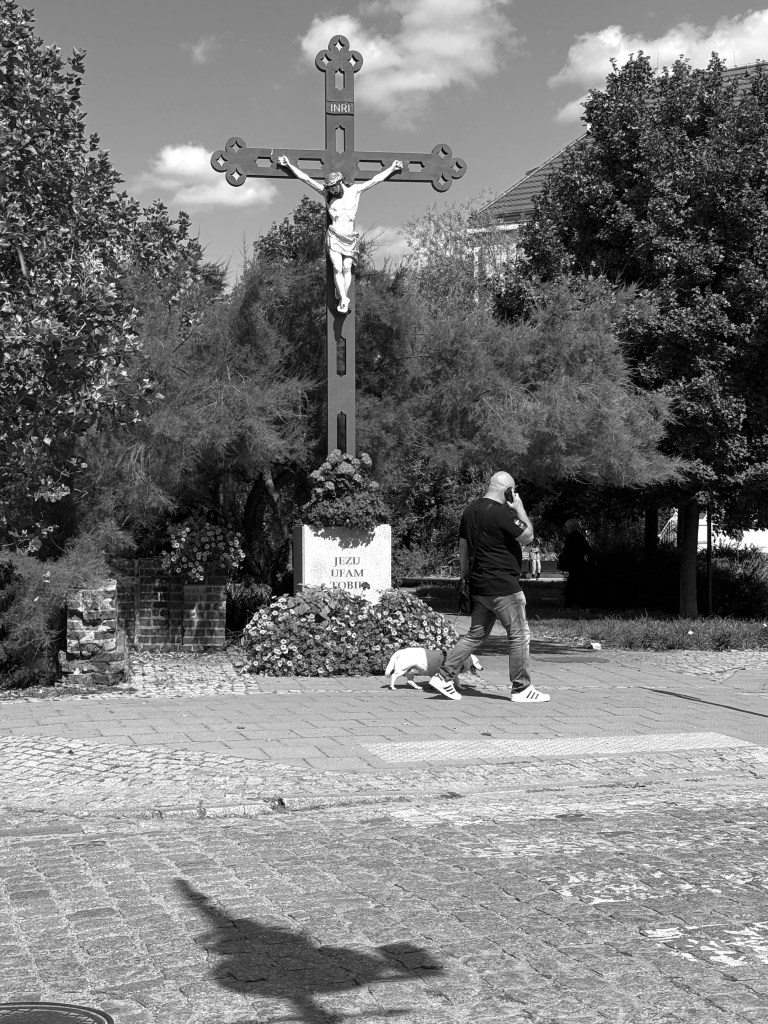
The faith is still strong, even as it comes in many forms. Taken while walking back from the Warta in Poznan.
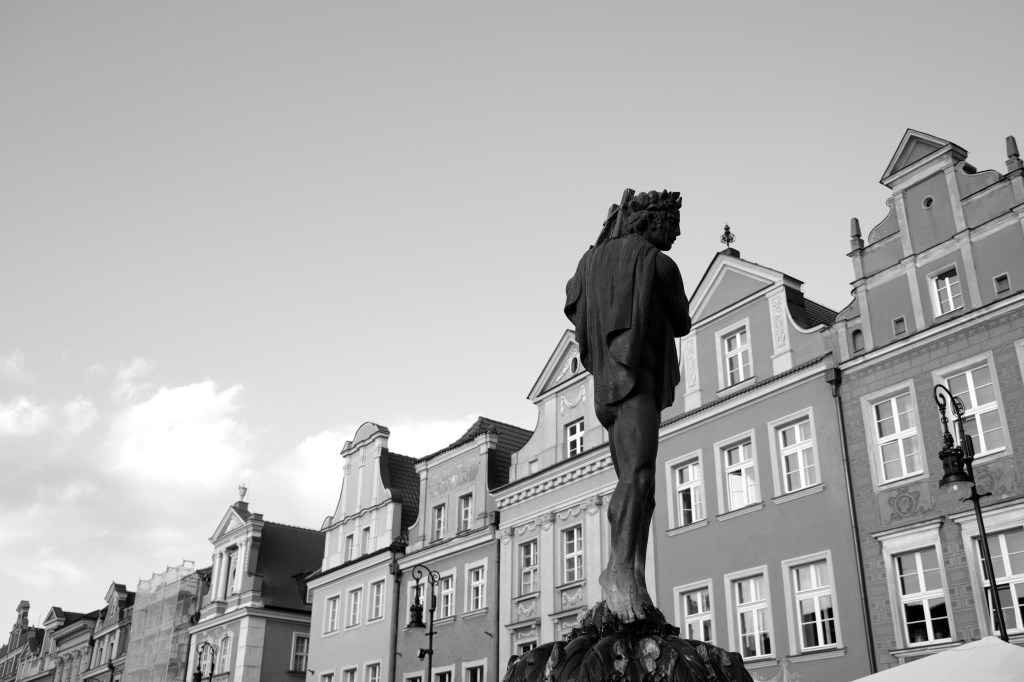
Taken in Poznan’s Market Square. At first glance, there’s a touch of Disney to the beautifully maintained and coloured buildings in this historic square. But they are the real deal, even if the restaurants and bars came later.

A museum guard and one of his charges. Taken near the exit at the Alte Nationalgallery on Museum Island in Berlin.
 because i said
Great shots Mister, can’t wait to hear all about this trip.
Later K
•••Karimobile
514 9944433
LikeLike
Thank you. There is, in fact, a lot to talk about with this trip.
LikeLike
Ditto to what Karim said.
That last photo in particular is brilliant! I presume you’re enjoying your camera.
I hope your cold has gone! In any case, you are obviously getting out and about.
Alison
LikeLike
Thank you! Definitely enjoying the camera. That last one is my favourite as well. The cold is not entirely gone but I am well past languishing in the room. Thanks again.
LikeLike
Nice shots. Thank you. Love the mirror concept, and the museum attendant mocking his yoga teacher. Gerry.
LikeLike
Thanks, man. The museum guard was especially funny after the book by the guy who guarded at the Met. Different perspective. Enjoy your trip!
LikeLike
How well your images catch feeling and mood in black and white, a contrast to Shari’s majesty with colour. Words are pretty good too!
Andrew F
LikeLike
Thank you, Andrew. I like the drama and dreaminess of black and white.
LikeLike
Yes I thought of the book when I saw that photo!
Andrew F
LikeLike
Such good pictures…can’t wait to hear about everything. The Jewish Museum sounds amazing.
Mary
LikeLiked by 1 person
Thank you Mary. A lot to unpack from this trip. Hard but good. We hope to see you soon as well.
LikeLike
A master’s hand and a master’s eye.
Thank you for both the writing and the photos.
Peter.
LikeLike
Thank you so much, Peter. We are in Munich. Hope to hear your voice soon.
LikeLike
Thank you for sharing
LikeLike
Thank you for reading and responding.
LikeLiked by 1 person
Powerful images and insights!
LikeLike
Thank you, Zsolt.
LikeLike
Brilliant and insightful as always, thank you. I remain a bit obsessed with museums. I’m still waiting for this one to become a reality – https://youtu.be/EXGgrjLdUfk – based on one of my old short stories that you may have read many years ago 🙂
LikeLike
Thank you, Paul. I love the idea of MOBD. Absolutely brilliant. Reminds me of the best of Borges. What do you mean “based on one of my old stories?” Is this literally based on one of your stories, and who created it (I guess it’s AI), and how and why?
LikeLike
You used to read and comment on my short story blog! But maybe you never read this one, the original is here – https://wherethetreesend.wordpress.com/2019/06/10/mobd/
I’ve been using AI to make short films, mostly new ideas and stories but a few based on old ones, like MOBD and this one, Postcards from the Future – https://youtu.be/qt2EueLMYLQ – which I do remember you commenting on 🙂
LikeLike
So, no, I don’t remember reading MOBD (which doesn’t mean I didn’t read it!). But I think I would have commented if I had read it. But, putting that aside for a moment, I have a million questions about creating these videos, which only reveals my simplicity. How do you even feed the info to AI? Clearly, it’s not literally based on the story, unless you give AI very wide parameters for interpretation. Do you supply a shooting script, what? And what about the music? I am astounded that you convert stories that are nearly thought experiments into videos. And, since I’m being honest, I also find it chilling, but that’s likely because I’m too old.
LikeLike
Hey Spyro 🙂 Thanks for being interested! I’ll try and keep an explanation of the process simple.
I start with a script which then becomes a storyboard (often still written and sketched on paper!). Then I make still images using AI image generating tools. First I try to nail the aesthetic and then the subject matter. Different models produce very different results (and have different costs) so it’s a lot of trial and error.
I use Nightcafe and OpenArt platforms as they provide access to dozens of different AI image generators. I’ll produce hundreds, sometimes thousands, of images to get what I’m after and even then I usually have to also make corrections or changes in Photoshop (visual and audio digital collage has always been my thing so that’s the easy part).
Once I have the images I animate them using a different bunch of AI models. Then I manually put the animations together to make the actual video, using video editing software, editing the final cut to the soundtrack, adding effects etc. Which makes it all sound quite linear but it’s not, there’s a lot of back and forth between points of the process.
It’s a similar process of using multiple tools when I make music using AI. Oh, and I use a platform called ElevenLabs to generate speech from text for voice overs or dialogue.
Hope that clarifies things a bit! It’s a lengthy process, for me at least. It’s far from just pushing a button a letting a computer do all the work! But I’m old enough to remember the first synthesisers and drum machines being used to make music, and people then thinking the computer was doing all the work. I guess the thing to bear in mind is that AI is just a tool, and in terms of making anything, it can be used to make slop or you can use it to try and make something with a bit more thought and depth that a few years ago would have been impossible or impossibly expensive.
Anyway – we’ve been looking at each others work for many years now and it’s always a joy to read your brilliant writing and see your wonderful photos. May they keep on coming!
LikeLike
Frankly, I am astounded at your process. I don’t think we’re that far apart in age (first drum machines? Kraftwerk?), which makes it even more astounding — especially for me, as I depend on my wife for all things tech. (Although I did learn to shoot video and editing on Final Cut Pro during the Covid era, to record her instructional videos. But that’s not saying much, compared to what you do.) I remain in awe and have subscribed to your YT videos. Last question: how long did it take you to make each of those vids, and are you happy with what you’ve achieved (I know that, for a creative person, the last half of that question is loaded). Thanks for you amazing work, creativity and focus.
LikeLike