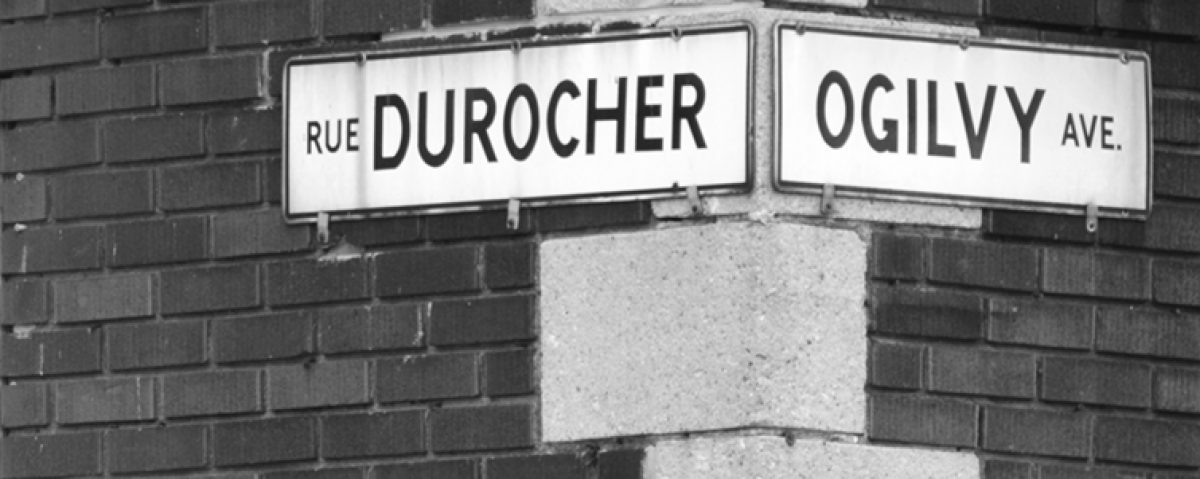
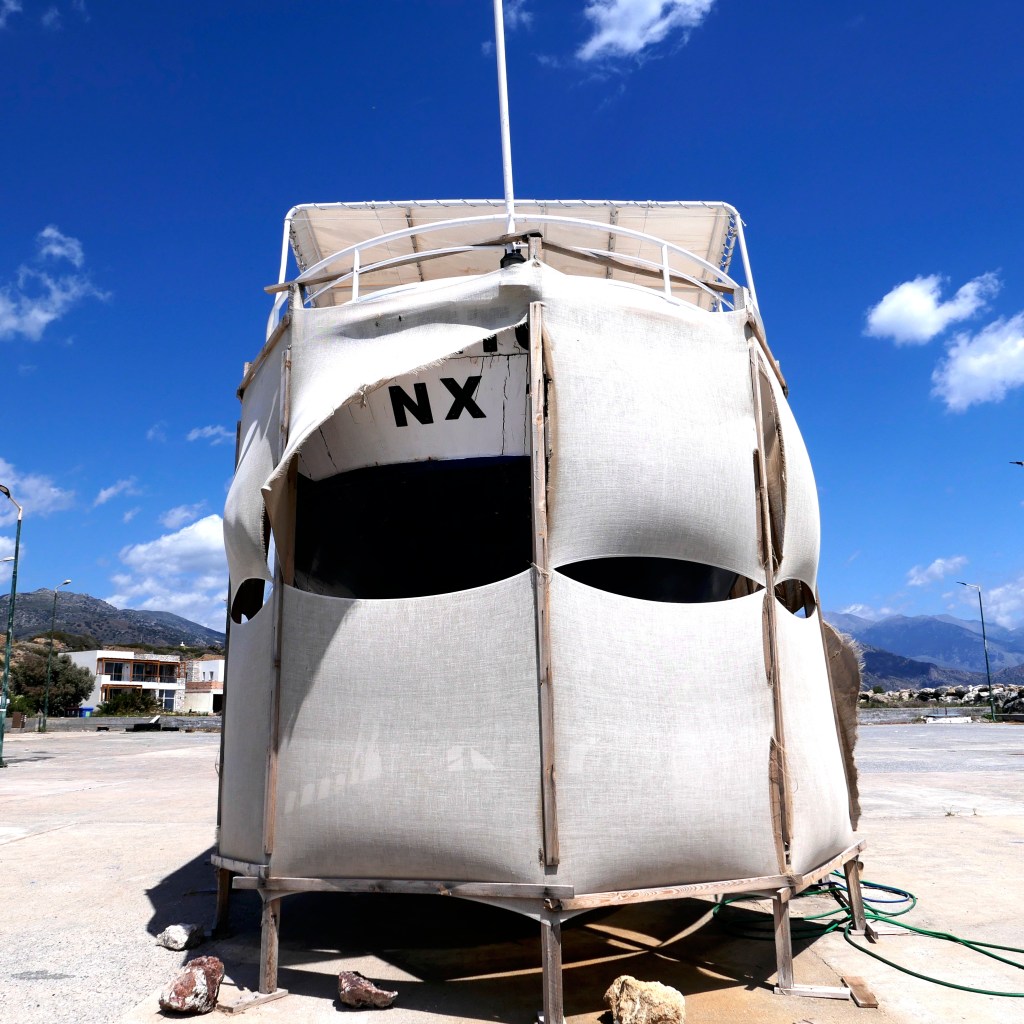
As we entered To Mikro Karavi (The Little Boat), a bookstore on Daskalogianni Street, Maria Callas — I assumed it was Maria Callas — was deep into some aria. I could see her at stage front, shattered, bloodied, defiant. Callas was cranked up so loud you couldn’t hear yourself think.
When I was finally able to concentrate long enough, I discovered that To Mikro Karavi has an excellent stock of books in Greek; Greek writers in translation (in several European languages); as well as bilingual editions (Greek text and translation on facing pages). Later on I also discovered that To Mikro Karavi also has a reputation for rudeness, which I didn’t know about when we walked in.
I had hatched a plan some years ago to improve my Greek by reading Greek translations of familiar books. David Sedaris seemed like a good bet: his sentences are simple, and he doesn’t go in for long words and fancy metaphors. As for the funny bits, well, we’d see how a translator would handle that.
“We don’t have any Sedaris books left,” shouted the handsome, bearded man over Maria Callas’s insistent wailing. He was sitting behind the counter. “But let me check on the computer,” he added. He read off a few titles, and I chose “Calypso,” one of my favourites. It would arrive next Saturday.
After learning we’re from Canada, the handsome bookstore proprietor and I fell into a typically Greek — which is to say typically disputatious — assessment of the political climate.
“The problem,” he announced in Greek, “is that your democracy is not a real democracy.” I bristled at this, at his presumptuous and lecturing tone. He then proceeded, in English, to tell me precisely why our democracy is debased. We talked on for a while, at high volume. Callas was still going strong, and by this time my ears were bleeding.
On the way out, I also bought a bilingual selection of poems by George Seferis (Nobel Prize for Literature, 1963), as well as “The Shortest History of Greece.” I simply couldn’t resist the title.
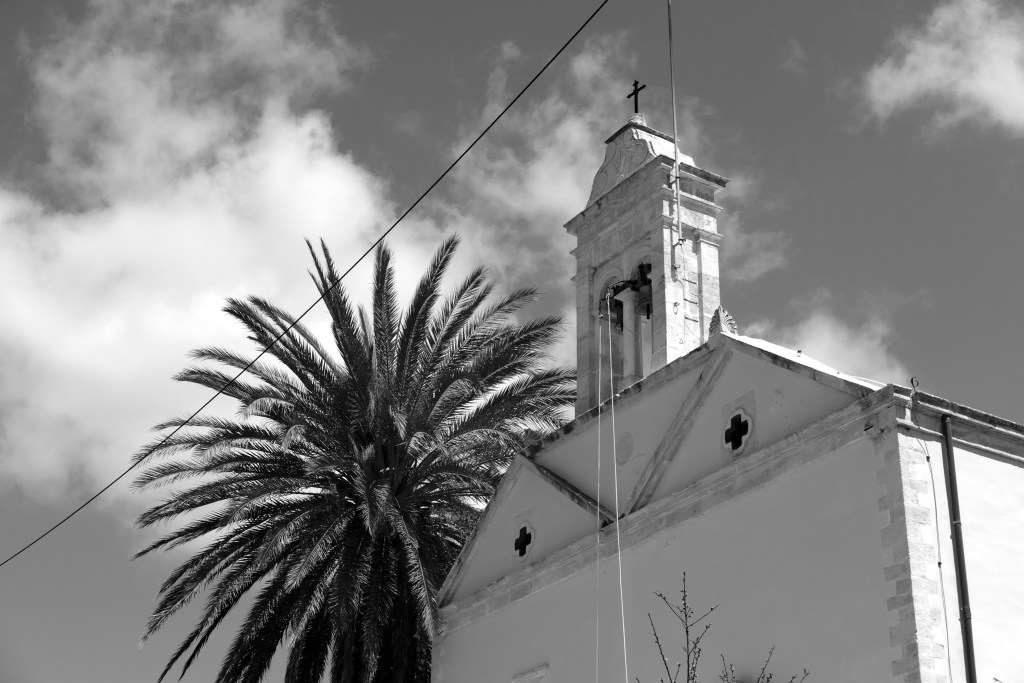
The following evening, we ate at Chrysostomos, whose menu we had studied closely while still in Canada.
Chrysostomos serves traditional dishes from the mountain region of Sfakia. In olden days, a journey from Sfakia to the coast by foot or donkey took several days — and why bother? The olives and goats need tending, the coastal people are all bandits anyway. So, necessarily, fish is not on the menu at Chrysostomos. Instead, there’s lamb and mutton, goat, rabbit and vegetable dishes baked in a wood fired oven. The bread, maybe the best I’ve ever tasted — its crumb moist and yielding and perfect — is baked in the same oven. It is impossible to stop eating it.
That’s half the menu. The other half is long-simmered stews, such as rooster and spaghetti, lamb and artichokes, octopus (the sole reminder that we’re on an island) and potatoes. All of it familiar: dishes from my own family’s table, and that I still sometimes cook.
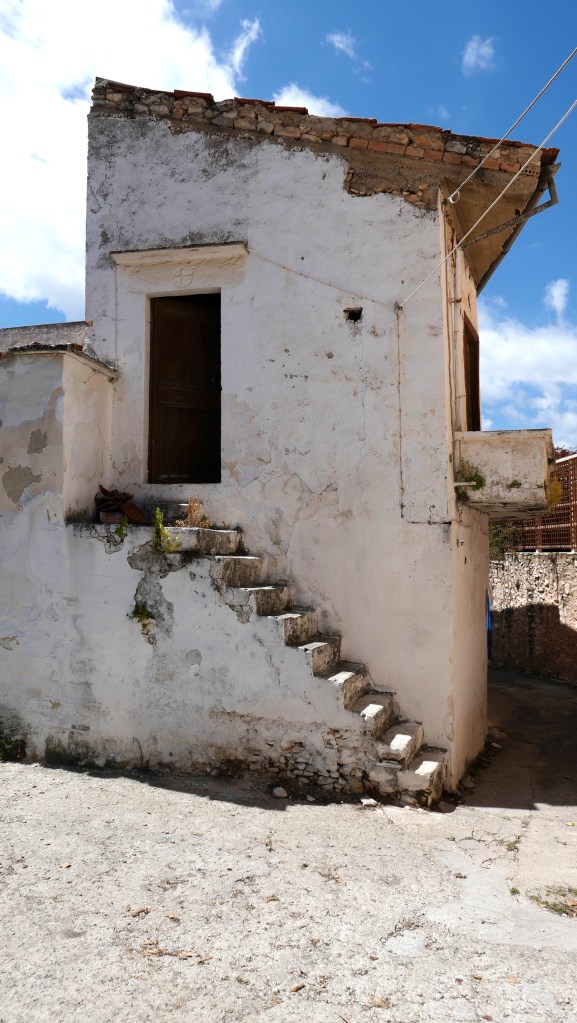
We drove into the ancient mountain village of Gavalochori yesterday morning, where the air was cool. As in every corner of Greece, cats are everywhere in Gavalochori, sleeping under cars, sunning themselves on doorsteps, sauntering imperiously on high walls.
We stopped at a kafenio, beside a monument to fallen soldiers, those who resisted the Turks in the late nineteenth century, and the Nazis more recently. Greek coffees and a bottle of sparkling water appeared on our table, and we sat contentedly, Shari sketching the village road behind me, as I wrote some of these fragments.
Eventually I wandered off to take pictures of hanging laundry, laneways, and the twin churches of Agios Charalambos and the Nativity of Mary. A cat on a whitewashed wall was licking its mitten. It paused to glare at me. It resumed its licking.
In many ways, it was a perfect morning.
Our next stop was the village of Vamos. Not as pretty, we thought, but maybe we were tired by then and made the wrong turn. We were also hungry. So, based on a guidebook recommendation, we tried the I Starna Tou Bloumosifi (I have no idea what that means, nor did I ask). I had the classic rooster and spaghetti I had already been hankering for (served here instead with egg noodles), while Shari had a stew of chestnuts, wild mushrooms and small whole onions. It was all pretty terrific.
By now, we’re used to the waiter appearing at the end of the meal with extras: in this case, a saucer of yogourt topped with a spoonful of quince jam, alongside an inevitable vial of raki and shot glasses. It’s lunchtime, we’re stuffed, we have to drive back. But it is impossible to refuse, and why would you?
Shari opened her book and sketched the grizzled old chef taking a cigarette break at a nearby table. When she was done, I invited him over to browse through her sketches.
He was impressed. “Ah, you are professional,” he said. His English was pretty good.
As a young man, he had once assisted a painter of icons. He had done some painting himself, in fact, using the traditional egg tempera medium on wood panels. It was a difficult medium, he agreed. Actually, he added, the true iconographer does not paint directly on wood. He first stretches skin made from donkey ears over the wood, and paints on that.
When I returned to the bookshop to pick up David Sedaris’s “Calypso,” the lecturing Cretan was gone. I was disappointed, because I had been formulating a strong rebuttal in my broken Greek.
Instead, his wife or business partner sat at the desk. She looked formidable.
“I’m on a mission to improve my Greek,” I said in my best unaccented Greek. I smiled, wanting to break the ice. “I think this book will help.”
“Hmm,” she responded.
The last lines of Cavafy’s most celebrated poem, “Waiting for the Barbarians,” come to mind:
What’s to become of us without barbarians?
These people were some sort of solution.


Thank you Spyro. I’m sitting here with a big grin on my face, and tummy grumbling. Hmm, would my neighbour notice if a rooster was missing?
Alison in Alexandria ON
LikeLike
Glad your stomach is rumbling. I make that dish regularly. Maybe someday for you! But I need a nice rooster.
LikeLike
Please tell me more about this Rooster and Spaghetti dish.
LikeLike
It’s pretty fantastic. I make it regularly at home, but, alas, with just a regular chicken. I will send you a recipe when I return home.
LikeLiked by 1 person
That would be fantastic, thank you! Enjoy the rest of your trip 🙂
LikeLike
Because you wrote, I remembered my Dad (he passed in 2022). He was from the tiny mountain village of Zympragou, southwest of Chania. Thanks so much Spyro for another beautifully written story. “You are professional!”
LikeLike
I think we’ll be going through there eventually. Thank you! And sorry for this, but please let me know who you are (this terrible platform doesn’t let me know) so I can thank you more effusively.
LikeLike
Thanks for taking us along with you on this special adventure!
LikeLike
You are welcome, thanks.
LikeLike
Thank you for taking us along! Another fantastic blog post.
Brenda
LikeLike
Ah, Brenda! Thanks for revealing yourself. I’ll hug Shari for you. Maybe give her a kiss too.
LikeLike
You paint a perfect picture with words of your day! A compelling read and memories stirred of gifts from the kitchen.My Uncle ( a fighter pilot without a plane) was captured at Maleme. Twenty years later he went back to the Island and near the airfield he was stopped by the woman who used to help out in the Laundry who recognised him , she said “Shame you had to leave in such a hurry as I had just finished darning your socks” ………………
LikeLike
What a fantastic story, thank you! Please identify yourself as I have no way of knowing who sent this. And, of course, thank your for reading and responding.
LikeLike
The reading and responding was a pleasure says the boy from Norfolk!
LikeLike
Still enigmatic, are we?
LikeLike
Such nice writing and lots of funny bits…bleeding ears. Happy that you’re having an honest to god relaxing holiday this was a very good plan. FYI it’s snowing here today.
Mary
LikeLike
Thank you, Mary. We (I) could definitely live here. The language and culture are very comforting. And so very beautiful at this time of year. Not at all the summer Greece.
LikeLike